Mathematics
9 Free Mathematics Courses, Adaptive From the First Question
Start Here
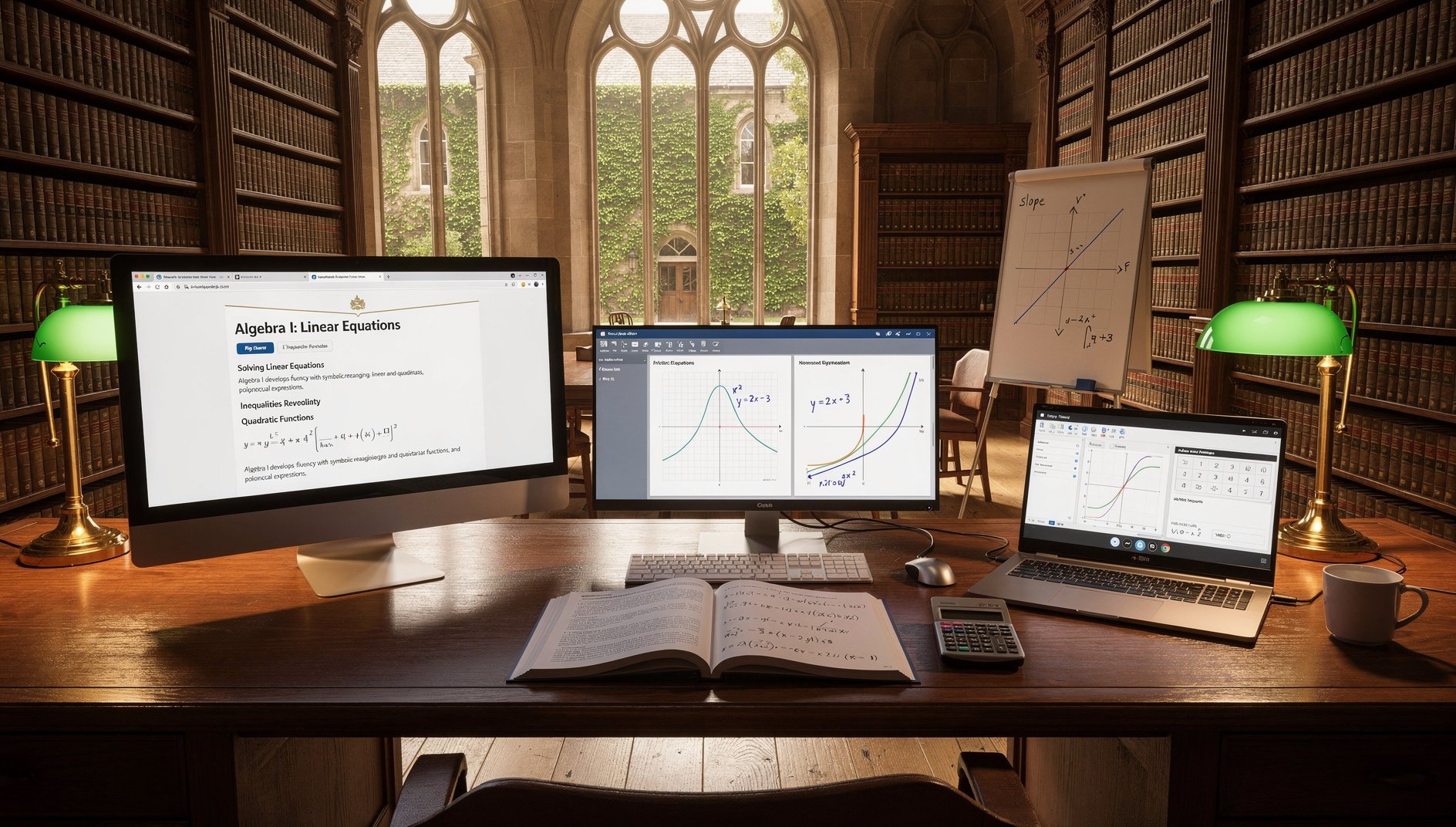
Algebra I
Algebra I is a foundational mathematics course covering the language and methods of symbolic reasoning, from solving linear equations and inequalities to analyzing quadratic functions and their graphs. Students develop fluency with polynomial arithmetic, factoring strategies, rational expressions, and radicals while building the problem-solving toolkit required for all subsequent mathematics.
Calculus I
Calculus I covers single-variable differential and integral calculus from limits and continuity through derivatives and their applications (optimization, related rates, curve sketching) to the Fundamental Theorem of Calculus, u-substitution, area between curves, volumes of revolution, and separable differential equations.

Pre Algebra
Pre-Algebra bridges arithmetic and formal algebra for grades 7-8 students, covering integer and rational number operations, exponents and roots, algebraic expressions, one- and two-step equations and inequalities, proportional reasoning, linear relationships, coordinate graphing, and intro geometry with the Pythagorean theorem.

Statistics
Statistics introduces data literacy through descriptive statistics, probability, discrete and continuous distributions, the central limit theorem, correlation, linear regression, and a conceptual introduction to confidence intervals and hypothesis testing — at a practical, accessible level without AP-depth derivations.
Build On It

Algebra II
Algebra II extends algebraic reasoning to a full catalog of function families — polynomial, rational, exponential, logarithmic, radical, and piecewise — plus complex numbers, matrices, conic sections, sequences and series, and combinatorics with probability.
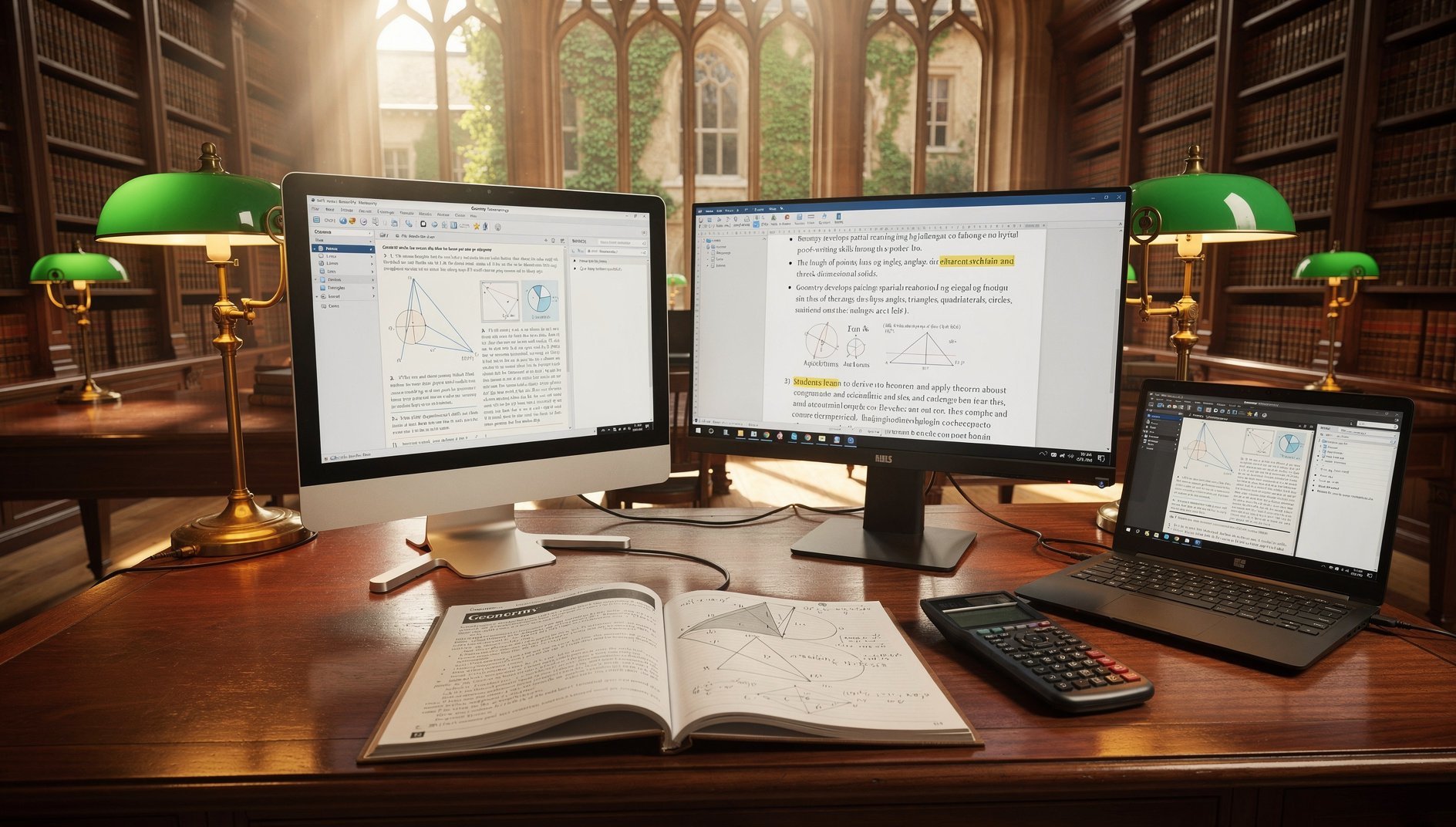
Geometry
Geometry develops spatial reasoning and logical proof-writing skills through the study of points, lines, angles, triangles, quadrilaterals, circles, and three-dimensional solids. Students learn to derive and apply theorems about congruence and similarity, calculate measurements of planar and solid figures, and use coordinate methods to verify geometric relationships.
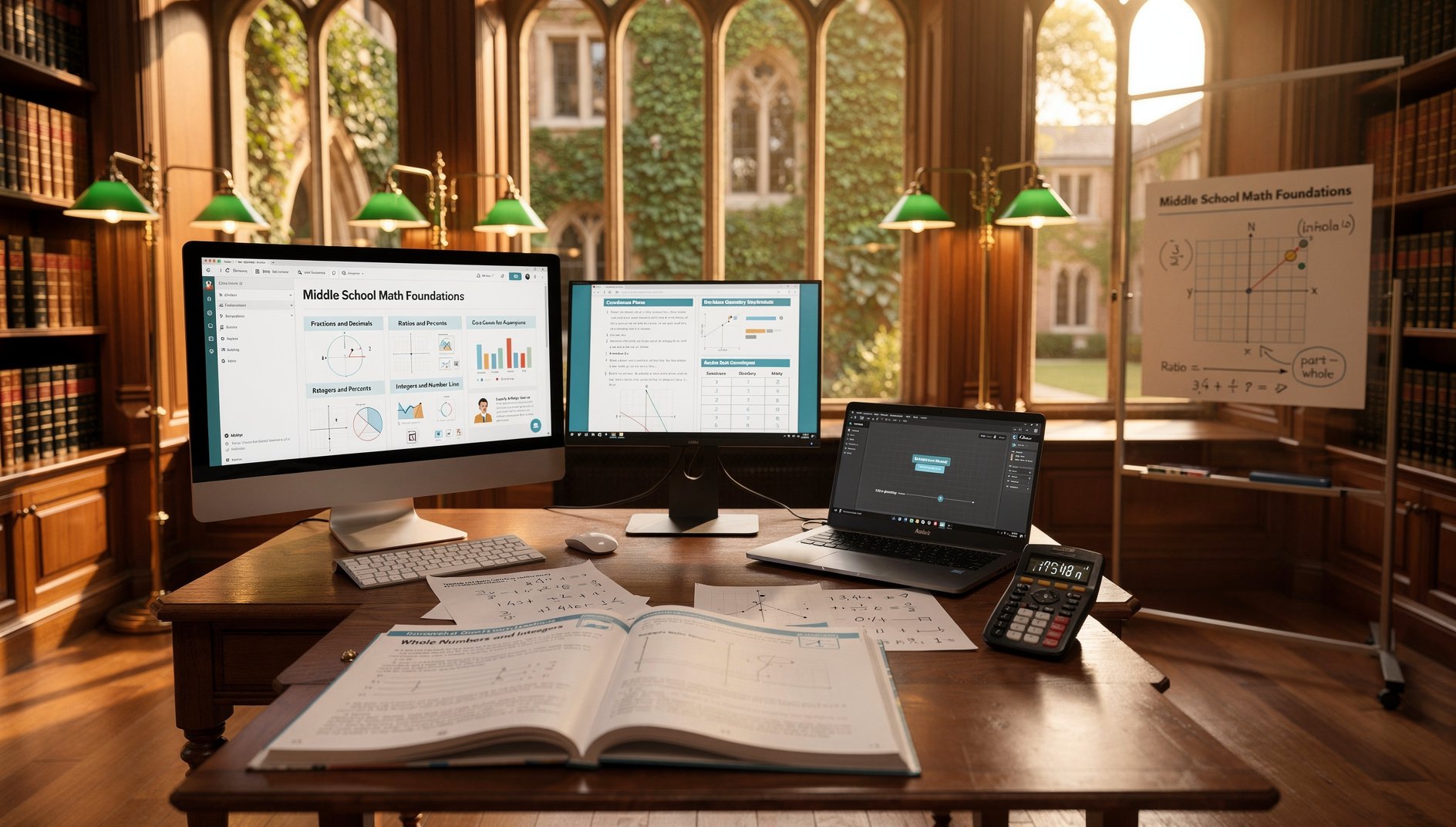
Middle School Math Foundations
Middle School Math Foundations covers the core numeracy concepts students need in grades 6-7: whole numbers, integers, fractions, decimals, ratios, percents, basic geometry, coordinate plane, measurement, and introductory data and probability.
Pre Calculus
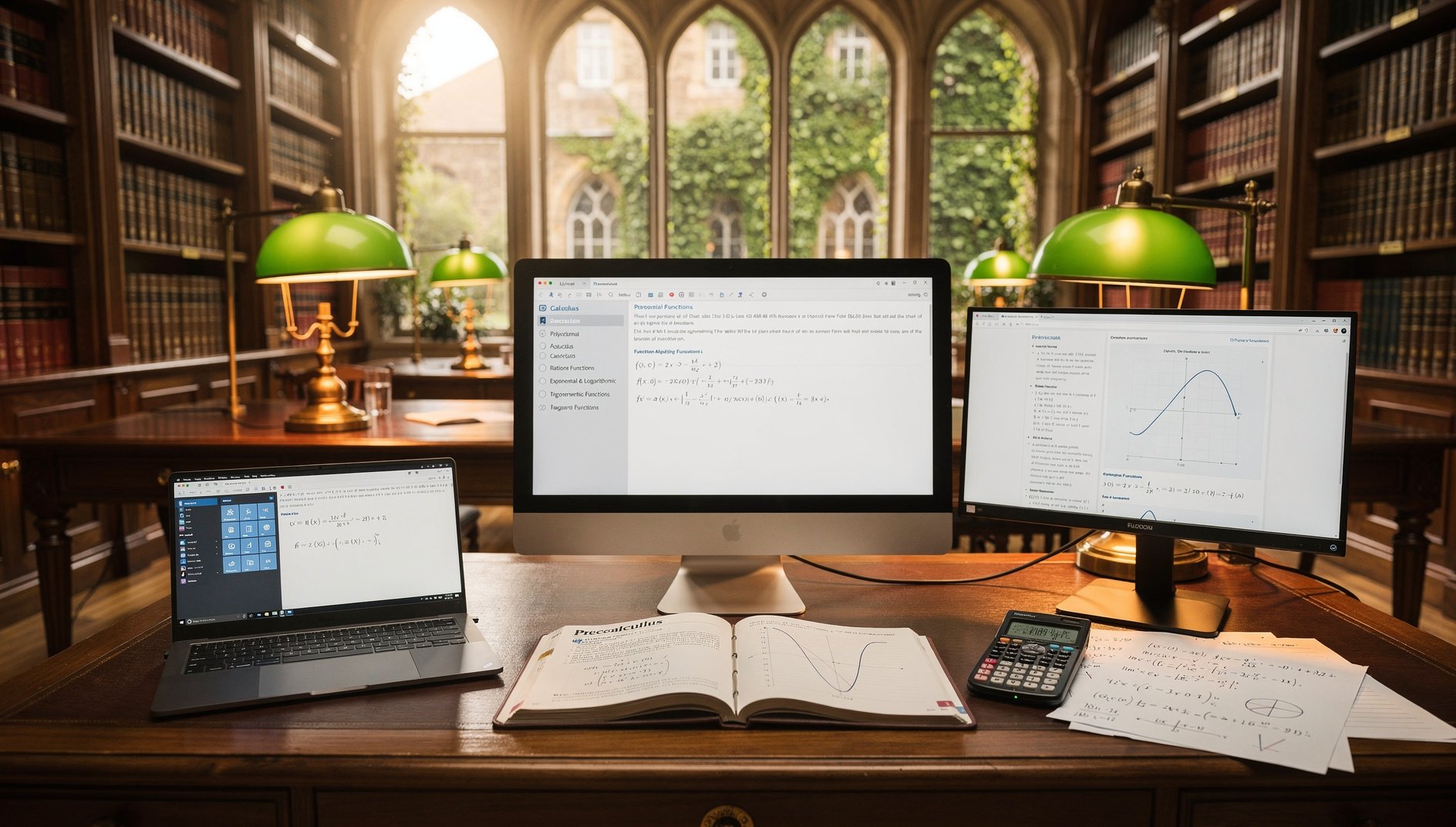
Pre-Calculus bridges the gap between Algebra and Calculus by deepening students' understanding of function behavior across polynomial, rational, exponential, logarithmic, and trigonometric families. The course also covers conic sections, sequences and series, vectors, polar coordinates, and an informal introduction to limits that prepares students for the rigors of Calculus.
Trigonometry
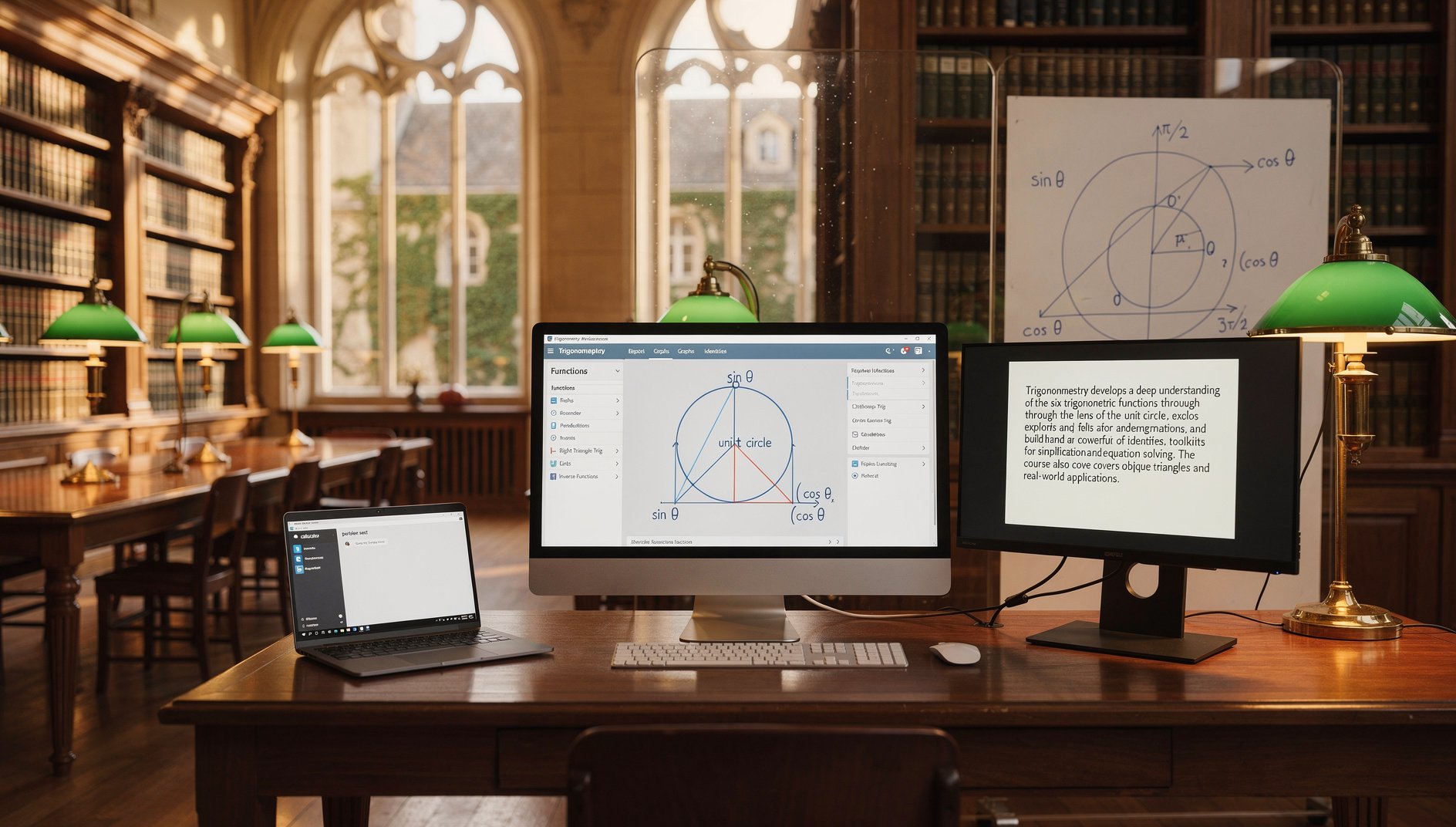
Trigonometry develops a deep understanding of the six trigonometric functions through the lens of the unit circle, explores their graphs and transformations, and builds a powerful toolkit of identities for simplification and equation solving. The course also covers oblique triangle applications using the Law of Sines and Law of Cosines, and concludes with the polar form of complex numbers and De Moivre's Theorem.
Why AccelaStudy® AI Open
Less Time on What You Know
Skip what you already know. Target only the gaps.
Cross-Domain Transfer
What you learn in one course carries into related ones.
$0, Forever
No trial clock, no locked chapters, nothing to cancel.
Start Mathematics today — free
Adaptive learning that skips what you know and targets what you don’t.
One account unlocks all 150+ free courses.